
A short session, on their terms
Family photo poses with teenagers
Family photo poses with teenagers work best when everyone has a say. Agree on one place, ten minutes and a few photos to choose from together. Nobody has to smile on cue, hug for the camera or agree to a social media post. Start with something you already enjoy doing together.
Let them choose the place and clothes
Offer two familiar places, such as a quiet park path or your garden, and let your teenagers suggest another. Ask when they would be comfortable taking a few photos. Let each person wear something they feel like themselves in; matching outfits are optional. Agree on the finish time before starting, and accept “not today” without bargaining.
Keep styling decisions small. If someone wants help choosing colours, use the separate family photo outfit guide. For an indoor session, the home photo guide covers window light and room layouts.
Ask before taking photos and again before sharing
Agree who will see the photos before you start. Permission to take a photo does not mean permission to post it. Let each teenager review the actual frames, veto a photo and choose whether it stays on your phone or goes into a private family album. Ask separately before sharing on social media, even from a private account.
Candid means an agreed photo while people do something naturally, not a hidden camera. Avoid surprise close-ups, embarrassing stories and comments about appearance. If someone says stop, put the phone away. Ask relatives not to forward or repost the chosen photos; a private album still cannot stop someone taking a screenshot.
Three relaxed setups for mixed heights
Choose one setup together. Aim for visible faces and a comfortable distance between people, rather than making everyone look the same height.
- A loose standing arc: stand on roughly the same line, with bodies angled a little towards the middle. A taller teenager can stand beside a shorter parent without crouching. Shift sideways if a face is hidden; hands can rest in pockets or hang comfortably. Touching is optional.
- A seated conversation: use a wide, stable bench and sit on the seat, not the back or arms. If some people stand just behind it, place their faces in the gaps. Let people choose their neighbours and look at whoever is speaking. Keep the rows shallow so everyone is in focus.
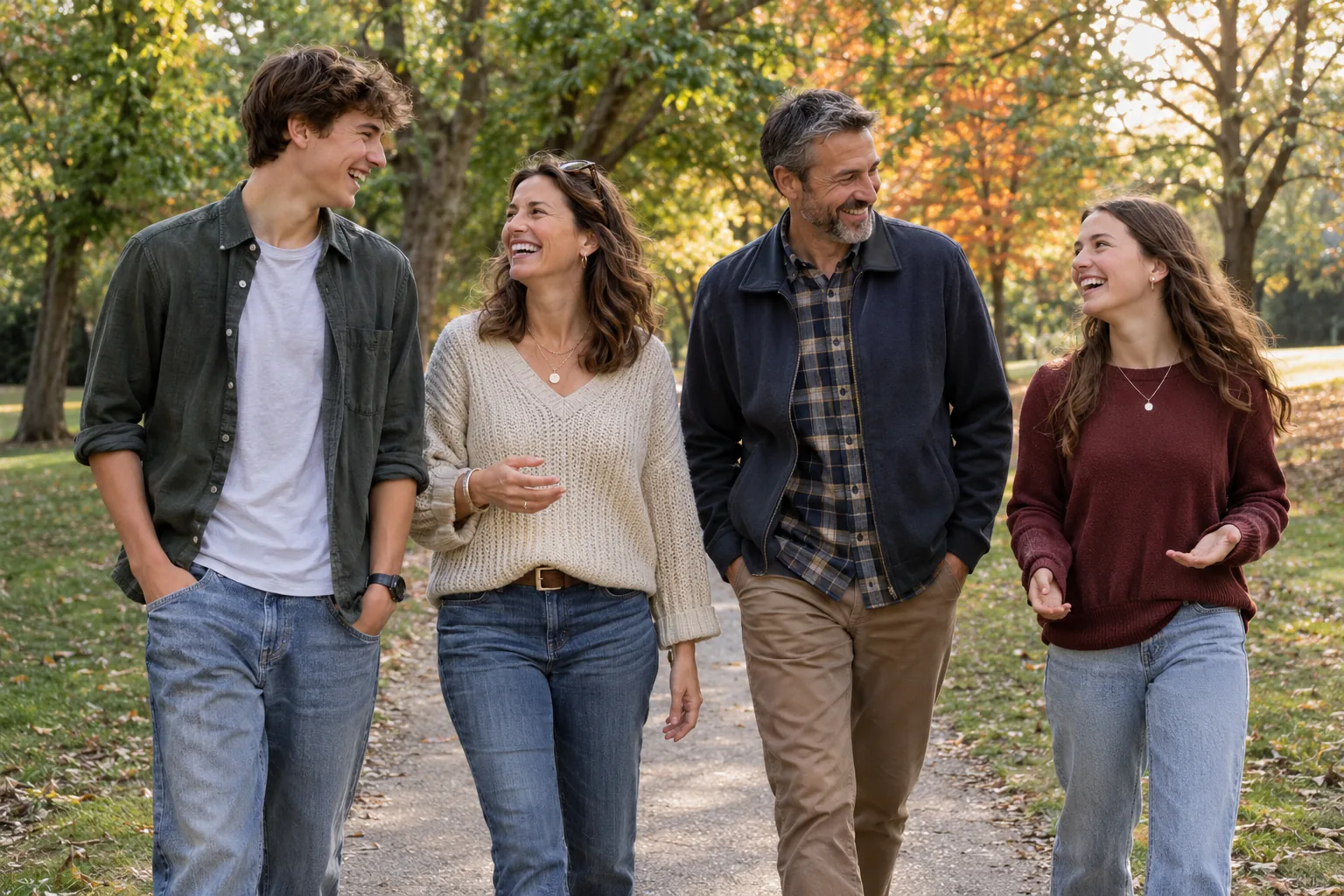
- A short walk and pause: walk side by side along a level, quiet path, talking about something everyone likes. Pause at the chosen spot for the timer, then keep walking. Nobody needs to link arms. Frame wide enough for the tallest person and check both edge faces.
Give the photo something to happen around
Let a teenager choose a small shared activity: dealing a card game at the garden table, showing someone a favourite song or talking during a walk. Ask one easy question, then photograph the reaction without requesting a bigger smile. A quiet expression is fine too. Skip staged tickling, compulsory hugs and jokes at anyone’s expense.
For a family with younger siblings as well, take the agreed whole-family frame first and let the teenagers leave when their part is done. Use the baby and toddler photo guide for supported poses and timing around naps.
Set the phone before the ten minutes begin
Choose soft open shade, clean the lens and start with the rear camera at 1× in normal Photo mode. Secure the phone on a tripod at roughly the group’s face height. Step back until everyone fits, with space above the tallest head. Avoid putting a face at the extreme edge of an ultra-wide view.
Leave your place in the group and take a test frame. Enlarge it to check every face is sharp and visible. Choose a timer long enough to join without rushing, often ten seconds if available. Test it once before calling everyone over. Take a few separate frames; timer and burst behaviour vary by phone. For movement, pause at a marked spot rather than trying to beat the countdown.
Phone timer and remote controls, step by stepA ten-minute plan that actually ends
- Minutes 0–2: confirm the chosen setup and who may see the photos. Take a couple of whole-family frames, looking at each other or at the lens by choice.
- Minutes 2–5: try the agreed activity or a short walk. Take a few frames during conversation, then pause.
- Minutes 5–7: let a teenager suggest one variation or take over directing. A sibling pair is optional, not another obligation.
- Minutes 7–10: look at the photos together, check faces and choose the ones everyone accepts. Retake one only if everyone wants to. Finish at ten minutes, even if the result is just one photo.
Keep the chosen photos within the family
If everyone agrees to share, Lumo is an invite-only family photo album. It is free under fair use and keeps original files. Free photo downloads are up to 2048px; downloading originals requires Lumo Pass. Invite only the agreed relatives and add only the photos everyone approved.
How a private family album worksWhat if my teenager does not want to be photographed?
Accept the answer and stop asking for that session. They can choose to help take the photo, suggest a later day or sit it out altogether. Do not treat a candid photo as a way around a refusal. One family photo is not worth making someone feel trapped.
How do we pose when a teenager is taller than the parents?
Let them stand at their natural height beside a parent, with everyone at a similar distance from the phone. Move sideways until all faces are visible. A seated bench arrangement can bring eye levels closer without asking anyone to crouch. Check the frame above the tallest head before starting the timer.
Should I ask before putting a photo in a private album?
Yes. Show the exact photo and explain who is in the album. Agree separately about social media and ask relatives not to forward it. A private album limits the audience, but does not replace permission or prevent screenshots and copies. If someone changes their mind, remove the shared photo and ask recipients to delete their copies.