
A calm home photo session
Family photos with a baby and toddler
Family photos with a baby and toddler work best as a few comfortable minutes together. Set up before calling everyone over, take the whole-family photo first and stop when someone needs a break. A cuddle or a shared look counts, even when nobody looks at the camera.
Invited to a Lumo album? Open it in any web browser: app.lumomagic.com
Choose a calm gap between naps
Try a familiar alert period after a nap and normal feeding, once everyone is comfortable. Keep naps and feeds on their usual rhythm; do not keep a baby awake for a photo. If the toddler and baby have different schedules, aim for one quick group photo in their overlap. Prepare the phone and background first, then allow five to ten minutes, with no need to use them all.
Support the baby, not a complicated pose
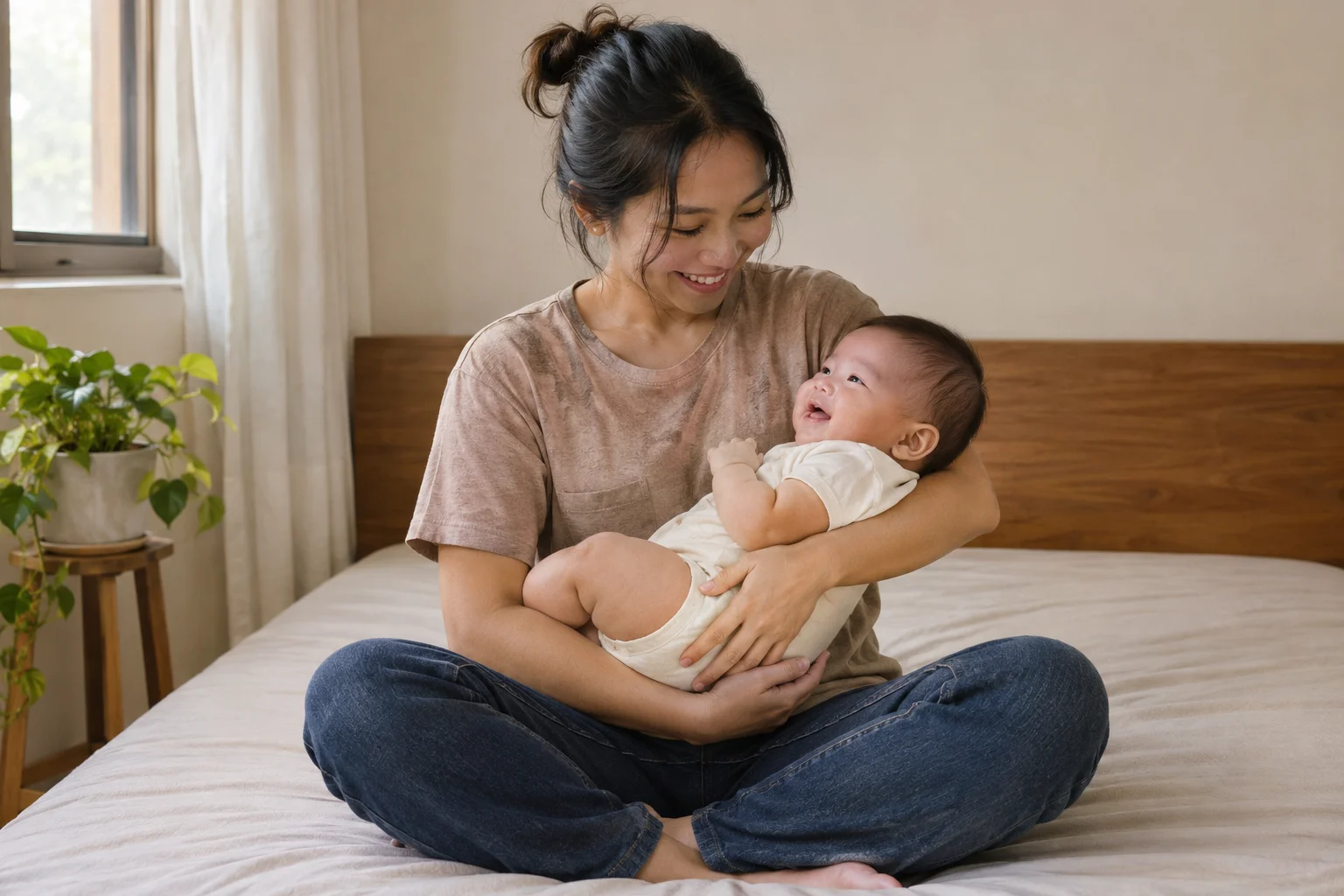
An adult must support the baby’s head, neck and body throughout. Sit on the floor for the simplest setup. For a bed photo like the example, the adult stays awake, seated well away from the edge, with the awake baby held securely in their arms. Never leave the baby lying or sitting on the bed for the photo.
- Do not use baskets, buckets, hanging fabric, stacked props or a newborn’s hands to support their head. Do not copy chin-on-hands or unsupported sitting poses.
- Do not ask a toddler to hold or carry the baby. An adult keeps the baby in their arms while the toddler sits beside them.
- Keep the face uncovered and cords, small objects and camera supports out of reach. If the baby needs sleep, stop and use their usual safe sleep space: on their back in a clear, firm, flat cot or bassinet.
Put soft window light across faces
Choose indirect daylight with the window beside you and a little in front. Avoid a bright window directly behind heads. Turn off room lights if they make skin orange. Place the phone at the seated adults’ face height, out of reach, and take a test photo with one adult. If one face is dark, turn the group gently towards the window. Keep every face visible and at a similar distance from the phone.
Set the phone before bringing everyone in
Clean the lens and start with the rear camera, 1× and normal Photo mode. Tap a face to focus and check that bright cheeks still have detail. Portrait mode can blur a small face or supporting hand, so leave it off for the group. Use a secure tripod or mount and a timer long enough to sit down without rushing; never balance the phone above the baby. Take several frames or use burst if your phone supports it. Zoom into a test photo: if moving faces blur, use a brighter spot and catch a quiet pause.
Find the timer and burst options for your phoneFour photos, in this order
- Whole family first: sit close on the floor, an adult cradling the baby and the toddler beside another adult if available. Take one looking at the phone and one looking at the baby.
- Parent and baby: keep the same supported cradle hold. Turn faces slightly towards the window and photograph a quiet look or smile.
- Sibling interaction: with the adult still holding the baby, invite the toddler to show a picture in a book. Keep the book away from the baby’s face. Photograph the exchange without asking for a kiss or a hug.
- One detail: photograph the baby’s hand against an adult’s finger while they remain supported. Check the group photo for sharp eyes, then finish.
Give the toddler one small choice
Try “sit beside me or beside Dad?” or let them choose a familiar book. One adult near the lens can sing a favourite line or play a gentle peekaboo. Use one cue, take a few photos, then pause. Keep snacks and eating separate from the posing. If they move, widen the frame and photograph the adults reacting. If they refuse, take the parent-and-baby photo and try the group another day. No forced smiles, restraint or repeated demands.
Monthly photos without a new setup each time
Repeat the same window, plain outfit colour and supported cuddle each month. Keep the phone position similar and add the month to the caption afterwards, rather than placing small number props beside the baby. Try a family cuddle, a close-up of hands or a book you enjoy together. Later, follow what the baby can comfortably do without positioning them beyond their ability. A missed month is fine; the photo does not need to happen on an exact date.
Choose a few photos, then share at your own pace
Compare expressions and sharpness, crop distractions and keep the originals. For the sharing part, use our separate guides to sharing newborn photos with grandparents, sharing baby photos privately and a private baby photo album. Agree together which photos to share.
When is the best time to photograph a baby and toddler together?
Choose an overlap when both are rested and comfortable, often after their usual nap and feeding routine. Set up first and take the whole-family photo before smaller combinations. Stop for hunger, tiredness or distress rather than extending the session.
Can a toddler hold a newborn for a sibling photo?
For this home shoot, keep the newborn fully supported by an adult. Seat the toddler beside them and photograph a shared look or a book instead. Do not put the baby in the toddler’s arms or ask them to carry the baby.
Can we use a bed for baby photos?
Use it only as a seat for an awake adult who holds the awake baby securely, away from the edge. Never leave the baby on the bed or use pillows to prop them up. For sleep, stop the shoot and place the baby on their back in a clear, firm, flat cot or bassinet.
Public Health Agency of Canada: safe sleep image guidance